
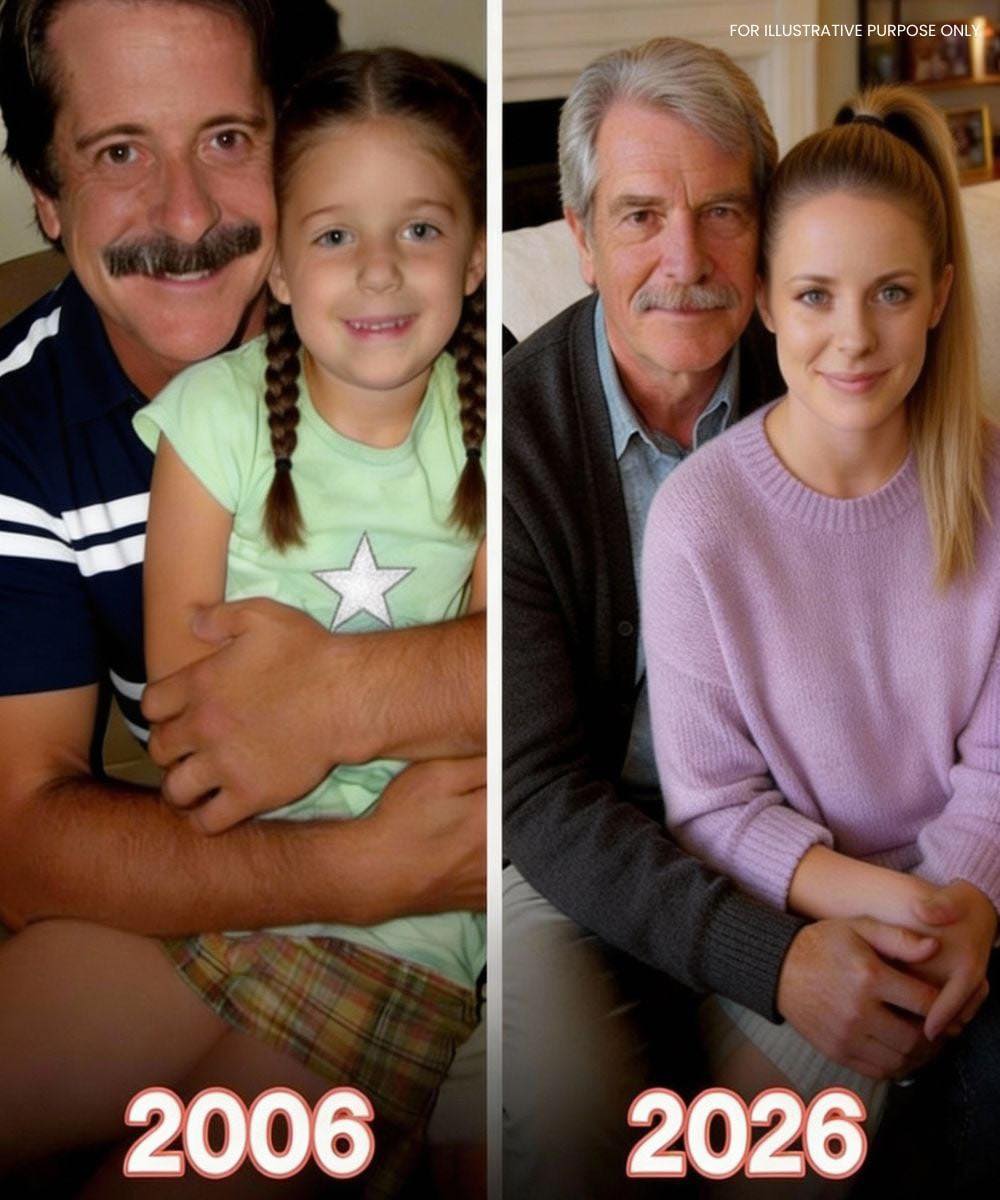
She was five years old.
I remember the hospital hallway—the harsh lights, the antiseptic smell. Emily lay silent, bruised by the seatbelt, ribs broken, a concussion clouding her memory. Doctors said trauma had scrambled her recollection. They advised patience. Don’t force it.
So I didn’t.
Overnight, I became her guardian. At fifty, I went from grieving father to full-time parent with no warning and no roadmap.
People called Emily’s survival a miracle. The police did. The pastor did too, standing before three caskets.
Life went on because it had to.
I relearned how to cook. How to braid hair without pulling too hard. How to sit through school performances without crying. Emily was quiet—too quiet. She never complained. Never misbehaved. Sometimes she looked at me as though waiting for someone else to come home instead.
We never spoke much about the cra:sh.
When she asked where her parents were, I gave the answer I had rehearsed endlessly.
“It was an accident. A bad storm. No one’s fault.”
She accepted it and didn’t ask again.
Years passed. Emily grew into a thoughtful, observant girl—good at puzzles, drawn to mysteries, far older in spirit than she should’ve been. When she left for college, I cried harder than I had at the funeral. You don’t realize how much life someone brings into a home until they leave it.
After graduation, she moved back in, working as a paralegal downtown. She was brilliant, determined—still the child who once slept through snowstorms on my shoulder.


