
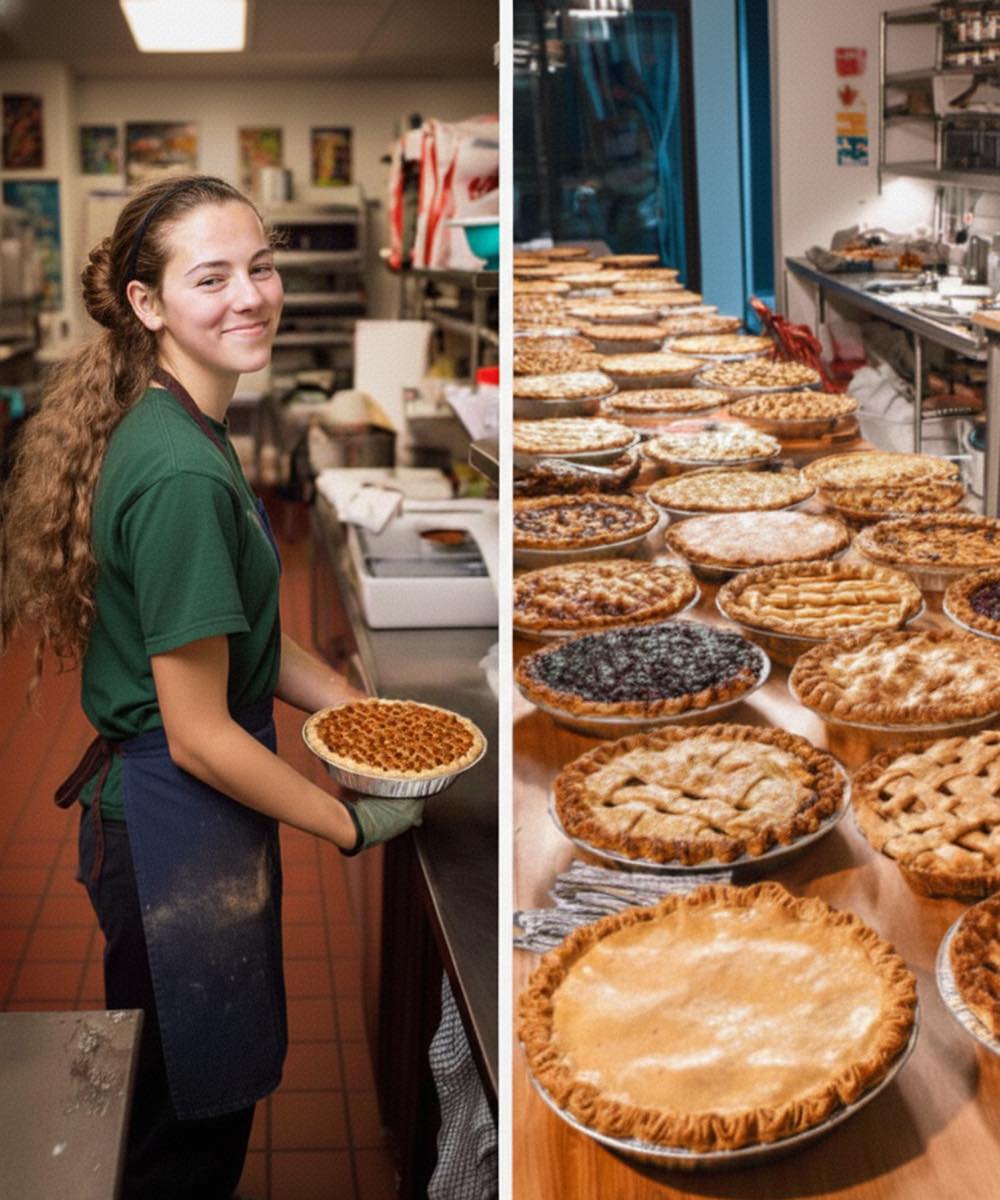
The note slipped from my fingers.
I slid down onto the floor beside the mail desk, staring at the pie, my heartbeat pounding behind my eyes.
The receptionist rushed over. I showed her the note, barely able to speak. She helped me up and gently suggested I go lie down. “Some things make more sense after a nap,” she said.
Three days later, a lawyer called.
His name was Paul. Calm voice. Precise words. He asked if I’d been delivering baked goods to the hospice for nearly six months.
“Yes,” I said, barely recognizing my own voice.
“Then you may want to sit down,” he replied. “Margaret Hendley passed away last week. She named you as the sole beneficiary of her estate.”
I was sitting on a bus bench outside the library, clutching scholarship forms, when he told me about the house, the car, and the untouched trust fund worth $5.3 million.
I laughed—sharp and startled—looking up at the sky.
“Pero… ni siquiera sabía quién era yo”, dije.
“En realidad, sí,” explicó Paul. “Pidió al personal de cuidados paliativos que te ayudara a encontrarte.”
Una enfermera memorizó mi abrigo y mi sombrero, me siguió una noche y me rastreó hasta el refugio. Margaret quería darme las gracias—en voz baja.
Paul me contó cómo se había quedado ciega, cómo adivinaba los sabores de tarta por su aroma, cómo guardaba rebanadas para compartir, cómo llevaba un diario.
Dijo que una vez le dijo: “Quienquiera que sea, es callada, joven y está de duelo. Pero aún sabe cómo amar.”
Pregunté por Margaret.
Había sido bibliotecaria jubilada. Viuda. Sin hijos. Cáncer de hígado en estadio cuatro. Apenas hablaba hasta que empezaron a llegar las tartas.
No se lo conté a nadie durante un tiempo. Tenía miedo de que la verdad desapareciera si lo decía en voz alta.
Entonces la tía Denise se enteró—por el aviso de sucesión.
Llamó.
“Me debes una”, soltó con brusquedad. “Te crié después del incendio. ¡Soy tu familia!”


